
Cabernet Sauvignon or Merlot: the differences and how to choose
Updated: 13.11.2026 · By the Eretz Gefen team
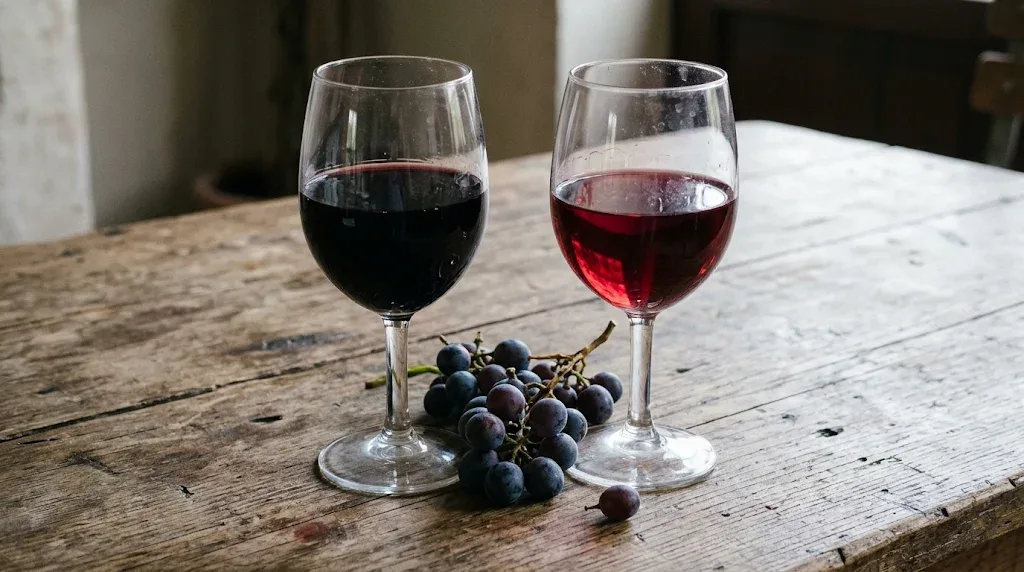
Cabernet Sauvignon and Merlot are found in almost every winery in Israel, and often in the same bottle. The broad difference: Cabernet is strong and strict, with tannins you feel on your gums, and Merlot is softer and rounder, and easier to warm to.
The differences in brief
- Tannins: Cabernet has prominent tannins, felt as dryness on the gums. In Merlot they are softer.
- Flavor: In Cabernet you usually hear blackcurrant, green pepper, cedar and tobacco. In Merlot, plum, black cherry and chocolate.
- Body: Cabernet is full and structured. Merlot is round and comfortable to drink even when young.
- Aging: Cabernet tends to improve with the years. Merlot is usually enjoyed earlier.
These are general tendencies. Winery, region, vintage and barrel aging change the picture, and there are deep Merlots and soft Cabernets.
Why they blend so often
In Bordeaux, where both varieties came from, there is almost no single-variety wine. On the Left Bank (Médoc) Cabernet leads, and on the Right Bank (Saint-Émilion and Pomerol) Merlot does, and Cabernet Franc usually joins them. Cabernet brings structure and tannins, Merlot brings roundness and fruit. Many wineries in Israel work with the same idea, which is why many labels say "blend" or list the varieties.
What to serve with each
- Cabernet: fatty, strongly flavored meat, such as entrecôte, ribs and grilled meat. Wine for meat.
- Merlot: chicken, burgers, pasta with meat sauce and stews. More flexible for everyday food.
Who each one suits
- Beginners, or anyone who doesn't like dryness: Merlot. It is soft and easy to drink.
- Anyone who likes a strong, complex wine: Cabernet Sauvignon.
- A gift, or a meal with varied guests: a blend of the two, which combines both styles.
Want to read about each variety in depth? Cabernet Sauvignon · Merlot · All varieties.
Questions and answers
What is the difference between Cabernet Sauvignon and Merlot?
Cabernet Sauvignon is stronger, with prominent tannins and aromas of blackcurrant and green pepper. Merlot is softer and rounder, with plum, cherry and chocolate.
Which wine is considered easier to drink?
Usually Merlot. Its tannins are softer, so it is approachable even for those not used to red wine.
What does Cabernet Sauvignon pair with?
Fatty, strongly flavored meat, such as entrecôte, ribs and grilled meat.
Why blend Cabernet and Merlot?
Because they complement each other: Cabernet gives structure and tannins, and Merlot gives roundness and fruit. This is how Bordeaux-style blends are built.