
Rosé wine: how it's made, dry or off-dry, and what to serve with it
Updated: 13.11.2026 · By the Eretz Gefen team
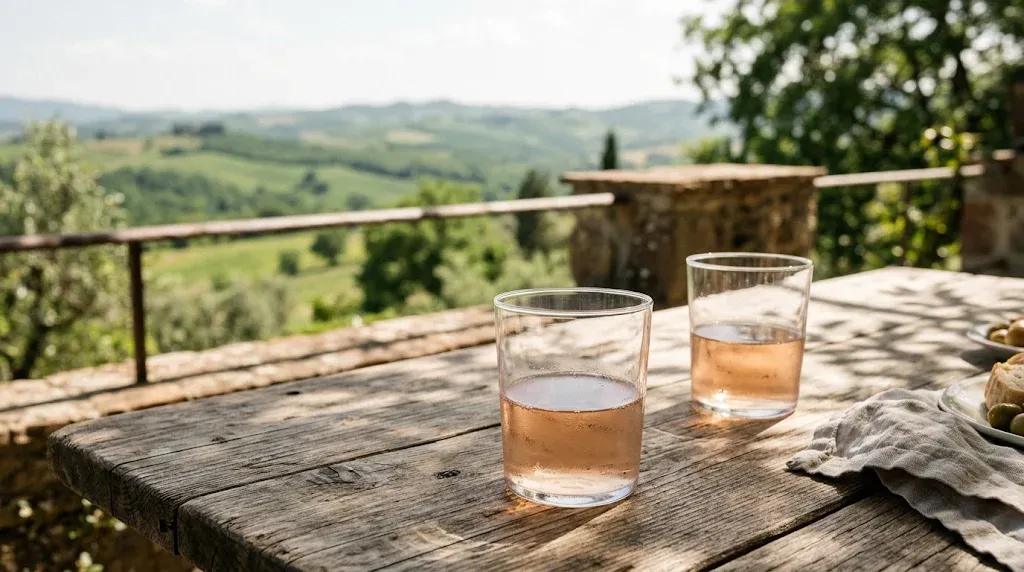
Rosé is usually not a blend of red and white, and not only a "summer" wine. It is made from red grapes, with brief skin contact, and it comes in every style: from dry and crisp to fruity and semi-sweet.
How rosé is made
- Brief skin contact. The color of red wine comes from the skins. For rosé, the juice stays with the skins for only a few hours, and is then separated. The longer the contact, the darker the rosé.
- Direct press. The red grapes are pressed gently, and the juice comes out pale pink. This is how most of the pale Provence-style rosés are made.
- Saignée (bleeding). While making red wine, part of the juice is "bled off" soon after crushing and turned into rosé. The red wine that remains becomes more concentrated.
In Europe it is forbidden to produce a still rosé by blending red and white wine. The exception is sparkling wine, and the well-known example is rosé Champagne.
What the color tells you
- Pale pink, almost salmon: usually dry, delicate and mineral. From Grenache, Cinsault or Mourvèdre.
- Strong, deep pink: fruitier, with body, strawberry and cherry. Sometimes from Cabernet Sauvignon, Merlot or Syrah.
The color doesn't tell you how sweet the wine is. For that, check the label.
Dry or off-dry
- Dry: fresh and crisp, goes well with food. The style most wine lovers look for.
- Off-dry: a little sweetness, fruity and approachable. Good for those just starting to drink wine, and for casual hosting.
The page of each rosé in the store says whether it is dry or off-dry.
How to serve
- Temperature: 8–12 degrees. Two hours in the fridge, then take it out a few minutes before serving.
- When to drink: most rosé is meant to be drunk within a year or two of the harvest. Buy the latest vintage.
- An open bottle: corked and refrigerated, two to three days. How long does open wine keep.
What to serve with rosé
Dry rosé is one of the most versatile wines for food: it is light enough for fish and salads, and has enough fruit for chicken and spiced cuisine.
- Fish: salmon, baked fish, sushi. Wine for fish · Wine for sushi.
- Chicken and turkey: roast chicken, schnitzel, poultry on the grill.
- Mediterranean and spiced cuisine: salads, roasted vegetables, Moroccan and Yemenite cooking.
- In a dairy meal: pasta in tomato sauce, pizza, quiches and soft cheeses.
Rosés in the store right now
Loading from the store…
See also: Dry, off-dry and sweet · Serving temperature
Questions and answers
Is rosé a blend of red and white wine?
Usually not. Rosé is made from red grapes with brief skin contact, or by direct pressing. In Europe it is forbidden to blend red and white for a still rosé. The exception is sparkling wine, such as rosé Champagne.
Is rosé sweet?
There are dry rosés and off-dry ones. The color doesn't tell you how sweet it is. The page of each rosé in the store says whether it is dry or off-dry.
At what temperature should rosé be served?
8–12 degrees. Two hours in the fridge, then take it out a few minutes before serving.
What goes with rosé?
Fish, chicken, salads, roasted vegetables and spiced cuisine. For a dairy meal: pasta in tomato sauce, pizza and soft cheeses.
How long can you keep rosé?
Most rosé is meant to be drunk within a year or two of the harvest. It's best to buy the latest vintage.