
How to build a home wine collection: how many bottles, what to buy, and how to store them
Updated: 13.11.2026 · By the Eretz Gefen team
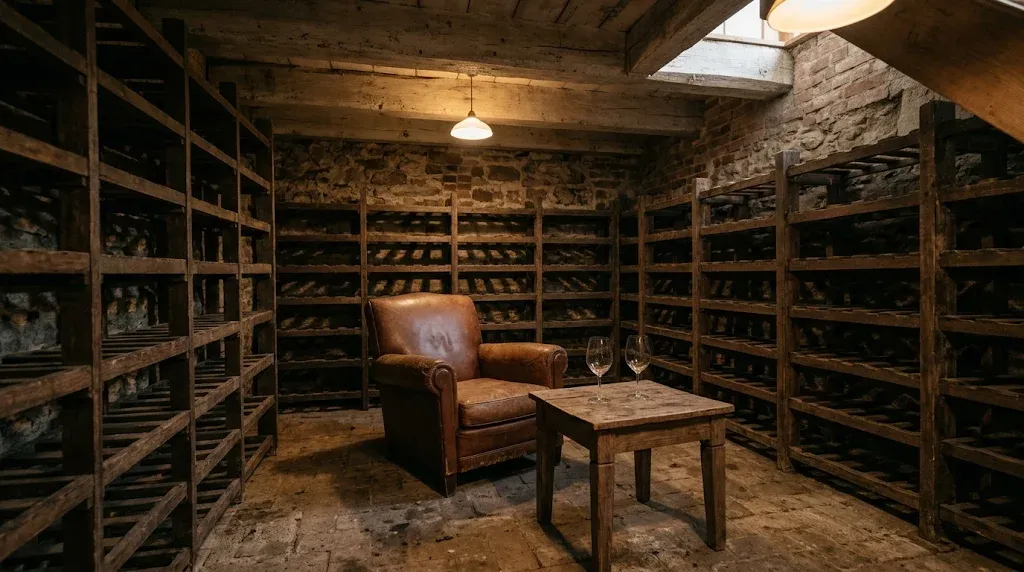
A home wine collection doesn't start in a cellar. It starts with a simple question: what do you drink in an ordinary week, and what do you want to open five years from now. You build from there.
The split: drink, entertain, age
A good collection is built from three shelves:
| Shelf | What's on it | Share of the collection |
|---|---|---|
| Drink now | White, rosé, and light to medium reds. What you open on Shabbat and midweek. | About half |
| For entertaining and holidays | Wines that impress guests, a sparkling wine for a toast, and a magnum bottle or two. | About a quarter |
| For aging | A full-bodied red from a higher-tier line, which will improve with storage. Two or three bottles of the same wine, so you can open one every few years. | About a quarter |
How to start: the first 24 bottles
- 12 for everyday drinking: six medium-bodied reds, four whites, two rosés. A variety of grapes and wineries, to learn what you like.
- 6 for entertaining: two bottles from a higher-tier line, one sparkling wine, and a wine for Kiddush or dessert.
- 6 for aging: three bottles each of two powerful red wines. It's worth asking us what suits aging.
Tip: buy by the six-pack. Many wines have a discounted six-bottle price, shown on the product page.
Which wines suit aging
- Suitable: full-bodied reds with plenty of tannins and good acidity, such as Cabernet Sauvignon, Petit Verdot, Syrah, and blends from higher-tier lines that spent a long time in barrel. Also certain whites, such as a higher-tier Chardonnay and Riesling.
- Not suitable: most whites, most rosés, simple sparkling wine, and light wines. They are meant to be drunk within a year or two.
Wine ages more slowly in a magnum bottle, which makes a magnum a good choice for long aging. Large bottles.
How to store
- Constant temperature: 12–14 degrees Celsius is ideal for aging. It matters even more that the temperature doesn't spike. In Israel, in an ordinary cabinet in summer, wine gets cooked.
- Humidity: between 60% and 70%, so the cork doesn't dry out.
- Darkness: light, especially sunlight, harms wine.
- On its side: for a bottle with a cork stopper, so the cork stays moist.
- No vibrations: not next to a washing machine or a regular fridge.
If you don't have a cool, stable room, a wine cooler is the solution. How to choose a wine cooler.
Tracking
Once the collection passes 30 bottles, it's worth writing down what you have, when it was bought, and when you plan to open it. A simple list on your phone is enough. What matters is not discovering a good bottle that has passed its peak.
Want help building a collection to a budget? The wine club, or just write to us.
Start here
Loading from the store…
More: How to read a wine label · Aeration and decanting
See also: How to store wine at home · Serving temperature
Questions and answers
How many bottles do you need to start a collection?
You can start with 24 bottles: 12 for everyday drinking, 6 for entertaining, and 6 for aging.
At what temperature should wine be stored?
12–14 degrees Celsius is ideal for aging, and it matters even more that the temperature stays constant. Humidity of 60% to 70%, in the dark, with bottles lying on their side.
Which wines are suited to aging?
Mainly full-bodied reds from higher-tier lines, such as Cabernet Sauvignon, Petit Verdot, Syrah, and blends. Most whites and rosés are meant to be drunk within a year or two.
Can you store wine in a regular fridge?
For a short time, yes. Over the long term a regular fridge is too cold and too dry, and the vibrations are bad for wine. For aging, a wine cooler is better.
Why store wine on its side?
So the cork stays moist and doesn't dry out. Otherwise air gets in and the wine oxidizes.