
Open and pour right away? When to aerate wine and when to use a decanter
Updated: 13.11.2026 · By the Eretz Gefen team
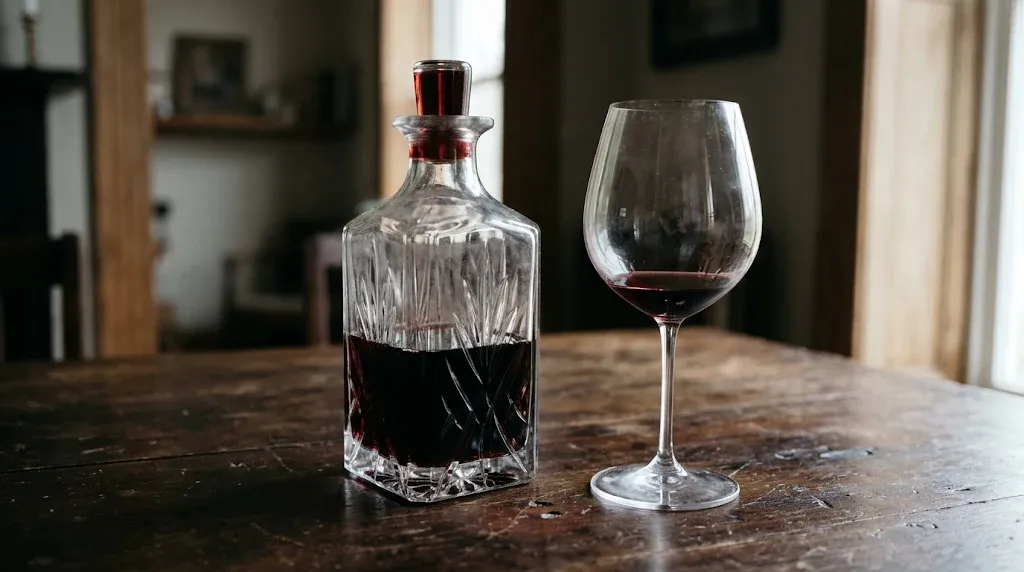
"Open it an hour ahead" is the most common advice in the wine world, and also one of the most misleading. A bottle that simply stands open barely touches the air. What really works is to pour, and sometimes to decant.
What air does to wine
When wine meets oxygen, aromas that were "closed" open up, and unpleasant smells that formed in the sealed bottle, such as sulfur or cellar odors, dissipate. In a young wine with a lot of tannin, the mouthfeel after a while becomes softer and rounder.
But air has another side: a delicate wine, or one aged for many years, can lose its aromas quickly and turn flat after half an hour.
Why use a decanter
- Aeration. When you pour from the bottle into a wide vessel, the wine meets a lot of air at once. In ten minutes it does what an open bottle does in hours.
- Separating sediment. In an aged wine, or one bottled without filtering, sediment forms at the bottom. Pour slowly, and the sediment stays in the bottle.
Which wines benefit
| Wine type | What to do | How long |
|---|---|---|
| A young, powerful red (Cabernet, Syrah, Petit Verdot, Malbec, heavy blends) | Decanter | 30–60 minutes |
| A medium red (Merlot, lighter blends) | Pour into a glass and swirl, or a short decanting | 10–20 minutes |
| A delicate red (Pinot Noir, light Grenache) | Usually not needed | Pour directly |
| A red aged 10 years or more | A gentle decant only to separate sediment | Serve immediately |
| Regular white and rosé, sparkling | Not aerated | Pour directly |
| A rich white that has seen barrel | Sometimes, if it feels closed | 10–15 minutes |
The times are a starting point. The best way is to taste.
How to do it, step by step
- Pour yourself a small glass right after opening. Smell and taste. If the wine is open and pleasant, nothing is needed.
- If it is closed, sharp or has an unclean smell, transfer it to a decanter. Pour so that the wine runs down the side.
- Taste again after 10–15 minutes, and then every quarter of an hour. When it tastes good, serve.
- For an aged wine with sediment, stand the bottle upright a day ahead, so the sediment settles to the bottom. Pour slowly in front of a light, and stop when the sediment reaches the neck of the bottle.
Common mistakes
- Opening an hour ahead and leaving the bottle standing. The only surface that meets air is the neck of the bottle. Almost nothing changes.
- Aerating every wine automatically. Light whites, rosé and sparkling lose freshness.
- Leaving an aged wine in the decanter for an hour. It is the most sensitive to air.
- Serving red too warm. Even a well-aerated wine will feel heavy and alcoholic at 25 degrees. Serve red at 16–18 degrees. Serving and storage temperatures.
And what about kosher and mevushal wine
As far as aeration goes, kosher wine behaves exactly like any other wine. Mevushal or pasteurized wine can also be put in a decanter.
From a halachic standpoint, when a non-mevushal wine stands open in a decanter on the table, the same laws of contact and pouring apply to it as to an open bottle. At an event where waiters or guests who do not observe Shabbat pour, the custom is to serve mevushal wine. About mevushal wine.
Do you need to buy a decanter?
Not required. If you mostly drink young wine, you can aerate in a large glass, by swirling. A decanter is worth it for someone who occasionally opens a powerful red or an aged wine. What to look for: clear, thin glass, a wide and stable base, an opening that is easy to clean, and a capacity of at least one bottle.
Wines that benefit from a decanter, from stock
Loading from the store…
More: how long does an open wine last · the aroma wheel
See also: serving temperature · wine glasses · how to taste wine
Questions and answers
Should you open a red wine an hour beforehand?
A bottle left open barely touches the air, so it makes very little difference. If the wine needs aeration, it is better to transfer it to a decanter, or at least to pour it into glasses and swirl.
How long should you aerate wine in a decanter?
A young, powerful red: 30–60 minutes. A medium red: 10–20 minutes. A wine aged many years: only to separate the sediment, and serve immediately. The best way is to taste every quarter of an hour.
Should you aerate white wine?
Light whites, rosé and sparkling are not aerated. A rich white that has seen barrel can sometimes gain from 10–15 minutes.
Can you aerate without a decanter?
Yes. Pour into a large glass and swirl gently. It is less effective than a decanter, but enough for most wines.
Can mevushal wine be put in a decanter?
Yes. As far as aeration goes, mevushal wine behaves like any other wine.