
Vintage years in Israel: what happened each year
Updated: 13.11.2026 · By the Eretz Gefen team
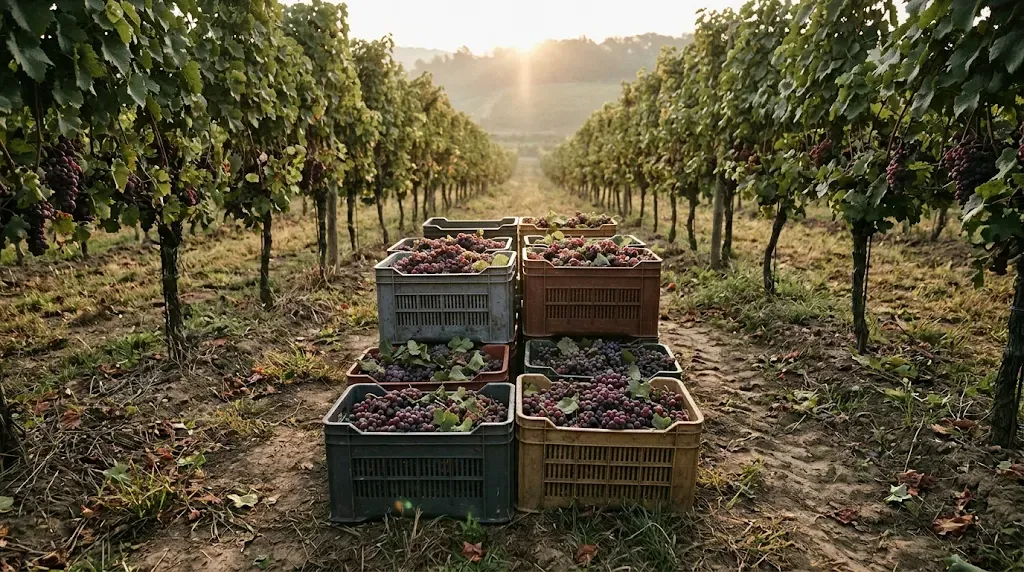
The date on the bottle is not just a number. It tells what the vineyard went through that year: a rainy or dry winter, a heat wave in the middle of harvest, or a war. Here is a review of recent years in Israel.
- This is a general picture. In every region, and in every vineyard, the year looks a little different.
- A good winery can produce an excellent wine even in a difficult year, thanks to the choice of plots and the work in the winery.
- The review is based on reports from wineries and professionals, with a link to the source for each year. For years in which we did not find an orderly report, we did not write.
2025: Drought and extreme heat
A particularly dry winter. May and June were favorable, and then an extreme heat wave in mid-August. The grapes ripened quickly, with a lot of sugar and less acidity, and the berries were small. The yield was average to low.
Sources: foodis, September 2025 · Israel Meteorological Service
2024: A harvest under war
In the north and the Golan, the harvest was shortened because of the war on the Lebanese border. Vineyards were abandoned or burned: for example, about 100 dunams of Dalton Winery, about 60 of Recanati, and about 300 dunams of Galil Mountain Winery were burned.
Sources: Jerusalem Post · Adam Montefiore
2023: A hot and challenging year
A mild winter with late and scarce rainfall, rain and hail in April, and a hot summer with heat waves. The harvest came early. Some wineries reported a challenging year, and some described a strong harvest. The harvest ended in the shadow of the war that broke out on October 7, with a shortage of workers.
Sources: ynet · Wine Spectator
2022: A Shmita year, favorable conditions
A cold, rainy winter, and a pleasant spring and summer. Ripening was slow and even, and the harvest began a week to a week and a half later than usual. And the yield was relatively high.
Sources: foodis, November 2022
2021: An excellent harvest in the Golan
In the Golan Heights: a winter with an average amount of rain and warmer than usual, and a long harvest, from early August to mid-October. The yield was 7% lower than usual, and the winery described an "exceptional harvest" in its quality.
Sources: Wine Industry Advisor · Jerusalem Post
2015: A difficult Shmita year
A cold winter with snow in Jerusalem and the Golan, followed by a pleasant summer, until a prolonged heat wave in August and an unusual dust storm in early September. Ripening was uneven, and quantities were small. Professionals defined it as one of the difficult harvests.
Sources: israelwinetour.co.il · Adam Montefiore
How to use this information
The vintage explains why a particular wine is light or heavy, fresh or ripe, but it is not a substitute for tasting. The practical approach: if you are buying wine for near-term drinking, white and rosé, it's best to choose the latest vintage. If you are buying a red and are unsure, you can rely on the winery name and the line more than on the year.
Update on 2025: the Golan Heights Winery described the 2025 harvest as the third in a row under combat, and said that exceptional quality compensated for reduced quantities. Source: the Mount Hermon Red 2025 wine page. We have not yet summarized the 2026 vintage, because we did not find an orderly, well-founded report.
More: Israel's wine regions · Wine and Shmita
Which vintage year was good in Israel?
According to winery reports, 2021 was an excellent year in the Golan Heights, and 2022 was considered a year with favorable conditions. 2015 was considered one of the difficult years. In every year there are differences between regions and wineries.
Does a difficult year mean a less good wine?
Not necessarily. A good winery can produce an excellent wine even in a difficult year, thanks to the choice of plots and the work in the winery.
Which vintage should you choose for white and rosé wine?
The latest vintage. Most of these wines are meant to be drunk within a year or two, and freshness is part of the flavor.