
Kosher wine: what makes a wine kosher and why wine needs certification
Updated: 16.11.2026 · By the Eretz Gefen team
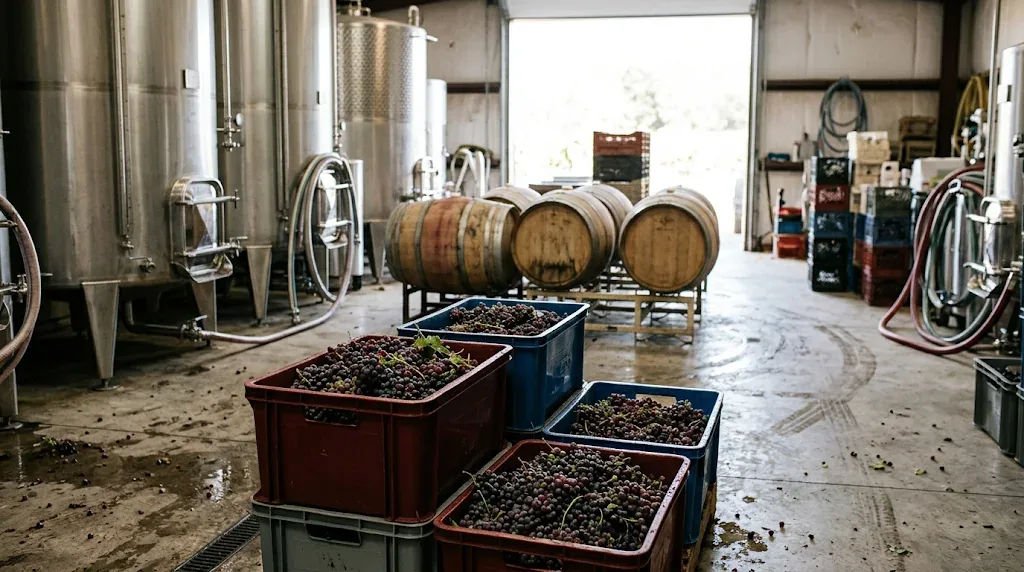
Grapes are kosher, but wine needs certification. The reason is not the material but who handles the wine: from the moment the grapes are crushed until the bottle is sealed, only Sabbath-observant Jews touch the wine. Here we explain where this comes from, what else is checked, and whether it changes anything in the glass.
- Who touches the wine: from crushing to bottling, only Sabbath-observant Jews.
- Materials: yeasts, processing aids and barrels with certification.
- Wine from Israel: tithes, orlah and Shmita.
- Taste: the production itself is the same. A good kosher wine is simply a good wine.
Why wine in particular
Halacha distinguishes between two things. Yayin nesech is wine that was poured as a libation in idol worship, and it is forbidden by the Torah. Stam yeinam is the wine of a non-Jew, or a Jew's wine that a non-Jew touched, even with no connection to idol worship. The Sages forbade it by decree, to keep people away from yayin nesech and to keep a distance between the nations. This decree is the reason wine needs closer supervision than most foods.
What this means at the winery
At a kosher winery, everyone who touches the wine or operates the equipment from the moment of crushing is a Sabbath-observant Jew. Once the bottle is sealed, touching a closed bottle no longer matters.
There is one exception: mevushal wine. The decree does not apply to wine that has been cooked, so anyone may pour it. Full explanation: what is mevushal wine.
What is checked in the materials
Winemaking uses yeasts, fining agents and other processing aids. Some of them can come from an animal source or from a non-kosher source, so in kosher wine all the materials and barrels are checked and approved.
Wine from Israel: the commandments tied to the Land
For wine from grapes grown in Israel, the commandments tied to the Land are checked as well: tithes are separated, grapes from the vine's first three years are not used (orlah), and the laws of the Shmita year are followed. More: wine and Shmita.
And wine from abroad?
The same rules apply everywhere. Wine made without supervision is not kosher, even if it is made from grapes alone. Many wineries around the world make kosher wine under supervision, and the certification symbol appears on the bottle.
Does kosher wine taste different
The production process of kosher wine is the same as that of any other wine: the same grapes, the same fermentation, the same barrels. The difference is in who does the work and in the supervision. Only mevushal wine goes through an additional heating step. More on levels of kashrut: mehadrin or regular kosher.
Wines from the inventory by kosher standard
Loading from the store…
More: How to read a wine label · Wine for Kiddush · All wines in the shop
Questions and answers
Why does wine need to be kosher?
The Sages forbade the wine of non-Jews and wine touched by a non-Jew, a decree known as "stam yeinam". So wine is considered kosher only when Sabbath-observant Jews handled it from crushing to bottling, under supervision.
How can wine be non-kosher if it is made from grapes?
The grapes are kosher. What decides is who handled the wine, which processing aids were added to it, and, for wine from Israel, also whether tithes were separated and the laws of orlah and Shmita were kept.
What is yayin nesech?
Wine that was poured as a libation in idol worship, which is forbidden by the Torah. In everyday speech the term is also used for wine forbidden by the decree of "stam yeinam".
Does a closed bottle become forbidden if a non-Jew touched it?
No. Touching a closed bottle does not forbid the wine. The question arises only with open wine that is not mevushal.
Is kosher wine less good?
No. The production process is the same. Quality depends on the vineyard and the winemaker, not on the certification.