
Brut, Extra Dry or Demi-Sec? A guide to sparkling wine
Updated: 13.11.2026 · By the Eretz Gefen team
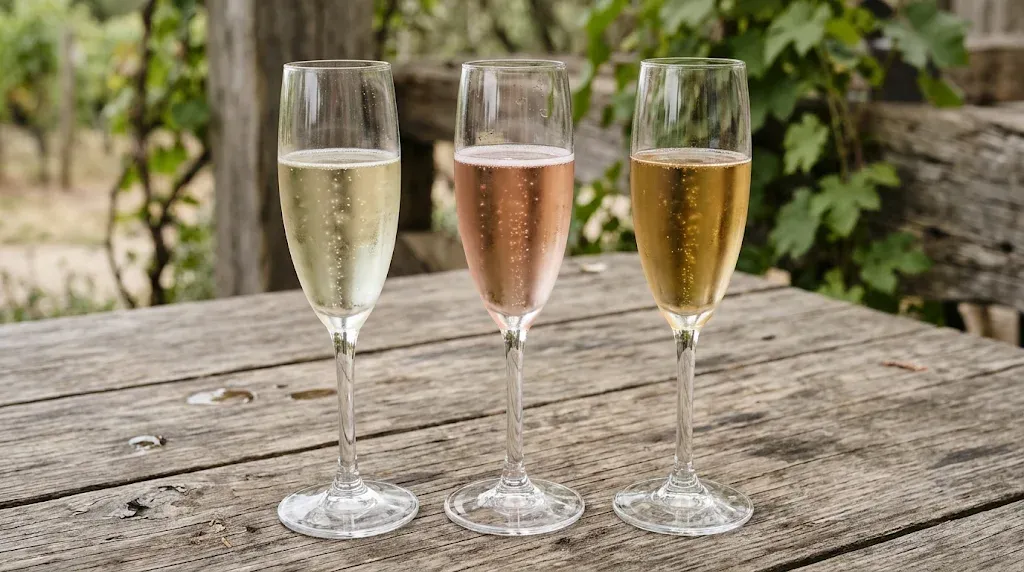
A sparkling bottle carries two important pieces of information: where it comes from (Champagne, Cava, Prosecco) and how sweet it is (Brut, Demi-Sec). Once you understand both, the choice is simple.
How sweet: the scale
This scale is set by European Union regulations, and many wineries outside Europe label by it as well. The numbers are grams of sugar per liter.
| On the label | Sugar per liter | How it feels |
|---|---|---|
| Brut Nature / Brut Nature | Less than 3 | Completely dry, sharp and clean |
| Extra Brut | Up to 6 | Very dry |
| Brut / Brut | Up to 12 | Dry. The most common style |
| Extra Dry | 12–17 | Off-dry, a touch of sweetness |
| Sec / Dry | 17–32 | Noticeable sweetness |
| Demi-Sec / Demi-Sec | 32–50 | Sweet |
| Doux | Over 50 | Very sweet |
The thing that confuses everyone: Extra Dry is sweeter than Brut, despite the name.
Moscato and Asti are usually sweet, light wines with low alcohol, typically between 5% and 9%.
Champagne, Cava, Crémant and Prosecco
- Champagne. Only from the Champagne region of France. The second fermentation, which creates the bubbles, takes place inside the bottle (the traditional method), and non-vintage Champagne ages at least 15 months before release, 12 of them on the lees. That is why it has flavors of toasted bread and brioche. In kosher Champagne the choice is more limited.
- Cava. From Spain, using the same traditional method, usually at a much friendlier price. A good choice for anyone who wants something dry and elegant without the price of Champagne.
- Crémant. Sparkling wine from other regions of France, such as Alsace and Burgundy, also made by the traditional method.
- Prosecco. From Italy, usually by the tank method: the second fermentation takes place in a large pressure tank. The result is fruity, fresh and simple.
- Israeli sparkling wine. Several wineries in Israel produce sparkling wine by the traditional method. Yarden Blanc de Blancs from the Golan Heights Winery is the best known among them.
- Pét-Nat. A "natural" sparkling wine that is bottled before the first fermentation has finished. Slightly cloudy, fruity, with delicate bubbles.
How to serve
- Temperature: 6–8 degrees for a simple, fruity sparkling wine, 8–10 degrees for Champagne and aged sparkling wine. A few hours in the fridge, or 20–30 minutes in a bucket of water and ice.
- Opening: hold the cork and turn the bottle, not the cork. The bottle is tilted slightly, and the cork comes out with a whisper rather than a bang.
- Glass: a tall, narrow glass preserves the bubbles. For a good Champagne you can also use a white wine glass, to smell more.
- Open bottle: with a special sparkling-wine stopper and in the fridge, it keeps one to three days. How long does open wine last.
What suits which moment
- A toast at an event: Brut or Cava. A small glass per person, about 10 glasses per bottle. The event wine calculator.
- Reception and dairy meal: Brut or Extra Dry, with fish, salads, pastries and cheeses.
- Dessert: Demi-Sec or Moscato. A good rule: the wine should be at least as sweet as the dessert.
- For those who don't like wine: a chilled Moscato. Light, sweet and pleasant.
Sparkling wines in the store right now
Loading from the store…
See also: dry, off-dry and sweet · wine glasses
Questions and answers
Is Brut sweet?
No. Brut is dry, with up to 12 grams of sugar per liter. It is the most common style of sparkling wine.
Which is sweeter, Brut or Extra Dry?
Extra Dry is sweeter than Brut, despite the name. Drier than Brut is labeled Extra Brut or Brut Nature.
Is every sparkling wine Champagne?
No. Champagne is only sparkling wine from the Champagne region of France. The well-known sparkling wine from Spain is Cava, from Italy Prosecco, and from other regions of France Crémant.
At what temperature should sparkling wine be served?
6–8 degrees for a simple, fruity sparkling wine, and 8–10 degrees for Champagne and aged sparkling wine.
How long does a sparkling bottle last after opening?
With a special sparkling-wine stopper and in the fridge, one to three days. After that the bubbles fade.