
The wine aroma wheel, in Hebrew
Updated: 13.11.2026 · By the Eretz Gefen team
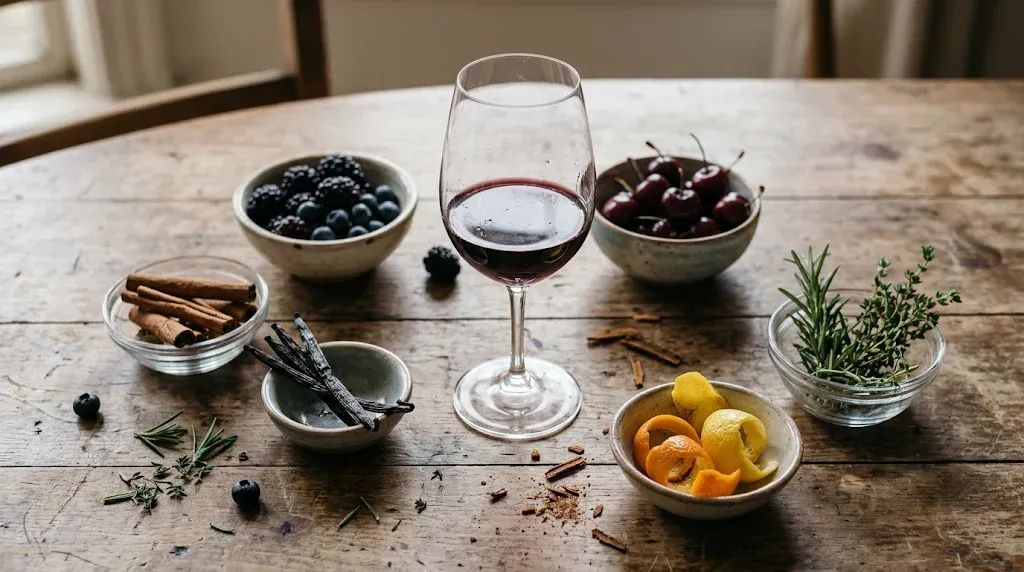
"It has cherry, a little vanilla and something of leather." How do you arrive at descriptions like that? The aroma wheel organizes everything you can smell in wine by family: fruit, flowers, spices, oak and aging. Click a part of the wheel and find where the aroma comes from, which grapes it is typical of, and which wines in the store describe it.
All aromas
Citrus fruit
A fresh, tart aroma. Typical of young white wines, especially from high-acidity grapes.
Lemon · Lime · Grapefruit · Orange peel
Typical grapes: Chardonnay · Sauvignon Blanc · Riesling · Semillon · Colombard · Emerald Riesling · Gendelai
Green fruit
Fresh and light. Common in young white wines and in sparkling wine.
Green apple · Pear · Fresh grapes · Quince
Typical grapes: Chardonnay · Riesling · Chenin Blanc · Muscat · Roussanne · Marsanne · Emerald Riesling · Marawi · Dabouki · Gendelai
Stone fruit
Ripe, juicy fruit. Typical of white wines of medium to full body.
Peach · Apricot · Nectarine
Typical grapes: Riesling · Gewürztraminer · Viognier · Muscat · Roussanne · Colombard · Emerald Riesling
Tropical fruit
Very ripe fruit. Appears in white wines from very ripe grapes, and in aromatic grapes.
Pineapple · Mango · Passion fruit · Lychee · Melon
Typical grapes: Chardonnay · Sauvignon Blanc · Gewürztraminer · Muscat · Marsanne · Colombard
Red fruit
Fresh red fruit. Typical of light to medium red wines, and of rosé too.
Strawberry · Raspberry · Cherry · Redcurrant · Red plum
Typical grapes: Merlot · Cabernet Franc · Pinot Noir · Carignan · Grenache · Marselan · Argaman · Sangiovese · Bitouni
Black fruit
Dark, ripe fruit. Typical of full-bodied red wines.
Blueberries · Blackcurrants · Black cherry · Black plum · Blackberry
Typical grapes: Cabernet Sauvignon · Syrah · Petit Verdot · Malbec · Carignan · Petite Sirah · Mourvèdre · Marselan · Argaman
Dried fruit
Very ripe or dried fruit. Appears in wines from very ripe grapes, in sweet wines and in some fortified wines.
Raisins · Fig · Prune · Date
Typical grapes: Semillon
Flowers
A floral scent. Most prominent in aromatic grapes, and violets appear in some of the red grapes.
Roses · Violets · White flowers · Citrus blossom · Jasmine
Typical grapes: Syrah · Cabernet Franc · Petit Verdot · Malbec · Pinot Noir · Riesling · Gewürztraminer · Viognier · Chenin Blanc · Muscat · Colombard · Emerald Riesling · Dabouki
Green and herbal
A fresh, green scent. It comes from the grape, and stands out especially in a few particular grapes.
Cut grass · Green pepper · Tomato leaf · Mint · Eucalyptus · Herbs
Typical grapes: Cabernet Sauvignon · Cabernet Franc · Petit Verdot · Carignan · Grenache · Mourvèdre · Marselan · Sangiovese · Sauvignon Blanc · Roussanne · Marawi · Gendelai
Spices
Some spices come from the grape itself, like black pepper, and some come from barrel aging, like cinnamon and clove.
Black pepper · Licorice · Cinnamon · Clove · Ginger
Typical grapes: Syrah · Petit Verdot · Carignan · Petite Sirah · Grenache · Mourvèdre · Marselan · Argaman · Bitouni · Gewürztraminer
Earth and minerals
A "mineral" or earthy scent. The term minerality is disputed: it is not clear that it comes from minerals in the soil. A petrol scent is typical of aged Riesling.
Wet stone · Flint · Damp earth · Petrol
Typical grapes: Pinot Noir · Carignan · Sauvignon Blanc · Riesling · Marawi · Dabouki
From the barrel
Scents that come from aging or fermenting in oak barrels. A new barrel has more influence than an old one.
Vanilla · Toast · Smoke · Cedar · Coconut · Chocolate
Typical grapes: Cabernet Sauvignon · Merlot · Petit Verdot · Malbec · Petite Sirah · Chardonnay
From fermentation
Butter and cream usually come from malolactic fermentation. Bread and brioche come from aging on the lees, for example in sparkling wine made by the traditional method.
Butter · Cream · Bread · Brioche · Yeast
Typical grapes: Chardonnay
Bottle aging
Scents that develop in wine after years in the bottle, mainly in red wines.
Leather · Tobacco · Mushrooms · Forest floor · Meat
Typical grapes: Cabernet Sauvignon · Merlot · Syrah · Malbec · Pinot Noir · Mourvèdre · Sangiovese
Oxidative aging
Scents that develop in aged fortified and sweet wines, and in some long-established white wines.
Nuts · Almonds · Caramel · Honey · Toffee
Typical grapes: Chardonnay · Riesling · Viognier · Chenin Blanc · Muscat · Roussanne · Marsanne · Semillon
How to use the wheel
- Pour a little wine into the glass, about a third.
- Swirl the glass for a few seconds. The air releases the aromas.
- Smell in two stages: first from a distance, then with your nose inside the glass.
- Start from the center: first ask "light fruit or dark fruit?", and only then try to be precise: "cherry or raspberry?".
- There is no wrong answer. Everyone smells differently. The wheel just gives words to what you already sense.
The three layers of aroma
- Primary aromas come from the grape itself: fruit, flowers, herbs and spices like black pepper.
- Secondary aromas come from the production process: from fermentation (butter, bread, brioche) and from the barrel (vanilla, toast, smoke).
- Tertiary aromas develop over the years: in the bottle (leather, tobacco, mushrooms) or through controlled contact with air (nuts, caramel, honey).
A young wine is usually full of primary aromas. As it ages, the fresh fruit fades, and the tertiary aromas take its place.
Small tips
- Wine that is too cold smells less. If it is hard to smell, wait a few minutes for it to warm up a little.
- A glass with a narrower rim concentrates the aromas.
- Want to train your nose? Smell fruits, spices and herbs in your kitchen, and come back to the wine.
The first aroma wheel was developed by Dr. Ann Noble of the University of California, Davis. The wheel here is an original Hebrew adaptation by Eretz Gefen, based on the division commonly used in the wine world into primary, secondary and tertiary aromas. The match to grapes is based on our grape variety guide.
More guides: Wine glossary · Grape varieties · Wine for Shabbat and holiday dishes
See also: How to taste wine