Wine glossary: all the words on the label and in the glass, in plain Hebrew
Updated: 13.11.2026 · By the Eretz Gefen team · 49 terms
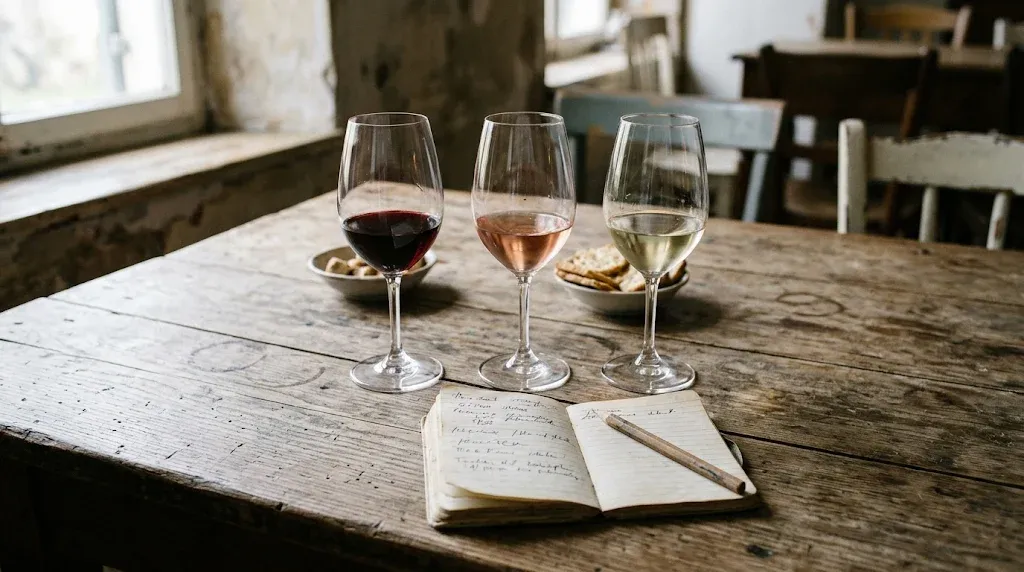
Tannins, body, brut, terroir... the world of wine is full of words that sound complicated. Here you will find the common terms, in plain Hebrew and in a sentence or two. You can search for a term or browse by letter.
No term found. Try another word.
א
- Aeration Aeration
- Deliberate contact between wine and air, for example by swirling the glass or pouring into a decanter. The air helps the aromas open up and softens young, tannic wines.
- Alcohol by volume ABV
- The percentage of the wine's volume that is alcohol. In most wines it is 11%-15%. High alcohol is felt as warmth in the mouth and contributes to a sense of full body.
- Aroma Aroma
- The smells of the wine that come from the grapes and the fermentation, such as fruit, flowers and herbs. Aroma is usually the word used for a young wine.
ב
- Botrytis (noble rot) Botrytis cinerea, Noble rot
- A fungus that attacks ripe grapes under certain conditions, drying them out and concentrating their sugar and acidity. Some of the world's most famous dessert wines are made from them, such as Sauternes and Tokaj.
- Bouquet Bouquet
- The smells that develop in wine with aging, in the barrel and in the bottle, such as leather, tobacco, mushrooms and nuts. As opposed to aroma, which comes from the grape.
- Blanc de Blancs Blanc de Blancs
- "White from whites": a white wine, usually sparkling, made only from white grapes, most often Chardonnay.
- Blanc de Noirs Blanc de Noirs
- "White from blacks": a white wine, usually sparkling, made from red grapes. They are pressed gently so that the color from the skins does not pass into the juice.
- Blend Blend
- A wine made from several varieties. For example, the Bordeaux blend combines Cabernet Sauvignon, Merlot, Cabernet Franc and others. Read more ‹
- Vintage Vintage
- The year in which the grapes were harvested. The year on the label is the vintage year, not the year of bottling.
- Late harvest Late Harvest
- A wine made from grapes picked later than usual, when they contain more sugar. It usually turns out sweet.
- Brut Brut
- A sweetness level for sparkling wine: dry. Under European law, a Brut has less than 12 grams of sugar per liter. Even drier: Extra Brut (up to 6 grams) and Brut Nature (less than 3 grams).
ג
- Tartrate crystals (wine diamonds) Tartrate crystals
- Small, clear crystals that sometimes form in the bottle or on the cork, especially when the wine is chilled. They are natural salts of tartaric acid, and are harmless.
- Body Body
- The sense of weight and fullness of the wine in the mouth: light as water, or full as cream. Alcohol, sugar and tannins add body. Read more ‹
ד
- Tears (legs) Legs, Tears
- The drops that slowly run down the side of the glass after you swirl it. They mainly indicate the amount of alcohol and sugar, not the quality of the wine.
- Decanting Decanting
- Pouring the wine from the bottle into a glass vessel (a decanter) before serving. It has two purposes: to separate the sediment in an older wine, and to aerate a young wine so that it opens up.
ה
- Oxidation Oxidation
- Damage to wine from prolonged contact with air. The fruit becomes dull, the color darkens, and in the end the wine may turn to vinegar. Read more ‹
ז
- Grape variety Grape variety
- The type of grape from which the wine is made, such as Cabernet Sauvignon, Merlot or Chardonnay. Each variety has its own flavors and structure. Read more ‹
ח
- Oak aging (barrel aging) Oak aging
- Aging the wine in wooden barrels, usually French or American oak. The barrel adds aromas of vanilla, toast and spices, and allows slow contact with air that softens the wine. A new barrel has more influence than an old one.
- Acidity Acidity
- The fresh, tart taste that makes your mouth water. Good acidity makes a wine fresh and food-friendly. Without it, the wine feels flat.
- Off-dry Off-dry, Medium dry
- A wine with a little perceptible sweetness. Under European law, for a still wine: above the dry threshold and up to 12 grams of sugar per liter (and, under certain acidity conditions, up to 18).
ט
- Tannins Tannins
- Compounds that come from the grape skins, the seeds and the barrel. They create a sensation of dryness and tightening in the mouth, like after strong tea. They are found mainly in red wine. They help the wine age, and soften over time.
- Serving temperature Serving temperature
- The temperature at which the wine tastes best. Sparkling and light white: about 6-10 degrees. Rich white: about 10-13 degrees. Light red: about 12-14 degrees. Medium to full-bodied red: about 15-18 degrees. In Israel, "room temperature" is too warm for red. Read more ‹
- Terroir Terroir
- A French word for everything that influences the grapes in the place where they grew: soil, climate, altitude, slope and sun. This is why the same variety sounds different in different regions. Read more ‹
י
- Dry Dry
- A wine in which almost all the sugar has turned into alcohol during fermentation. Under European law, a dry still wine contains up to 4 grams of sugar per liter (and, under certain acidity conditions, up to 9). "Dry" describes sweetness, not a sensation of dryness in the mouth. That is done by the tannins.
- Varietal wine Varietal wine
- A wine made mainly from one variety, with the variety's name written on the label. Read more ‹
- Orange wine Orange wine
- A wine made from white grapes fermented together with their skins, like a red wine. It comes out orange-amber in color, with delicate tannins.
- Fortified wine Fortified wine
- A wine to which a strong spirit (usually grape brandy) has been added, before, during or after fermentation. Usually stronger and sweeter. Examples: Port, Sherry and Madeira.
- Sparkling wine Sparkling wine
- A wine with bubbles of carbon dioxide created in a second fermentation. Made by the traditional method (in the bottle) or the Charmat method (in a tank).
- Corked wine (cork taint) Corked, TCA
- A fault caused mainly by a compound called TCA, sometimes found in cork stoppers. The wine smells of mold, wet cardboard or a damp cellar, and the fruit disappears. It is not harmful to health, but the wine is faulty.
- Dessert wine Dessert wine
- A sweet wine that suits desserts or replaces them. Made from late-harvest grapes, grapes affected by noble rot, dried grapes, or as a fortified wine.
- Still wine Still wine
- A wine without bubbles. Any wine that is not sparkling.
- Fortified wine Fortified wine
- A wine with pure grape spirit added, so its alcohol level is higher than that of regular wine. Madeira, port and sherry are styles of fortified wine. More about kosher fortified wine.
כ
- Single vineyard Single Vineyard
- A wine whose grapes all came from one specific vineyard, and not from several vineyards.
- Old vines Old Vines, Vieilles Vignes
- Old vines yield fewer grapes, and sometimes a more concentrated flavor. The term has no uniform binding definition, and each winery decides what counts as "old".
מ
- Magnum Magnum
- A bottle of 1.5 liters, like two regular bottles. A double magnum is 3 liters. Read more ‹
- Minerality Minerality
- A tasting description for a sensation of wet stone, chalk or gentle saltiness, mainly in white wines. The term is controversial: it is not clear that it comes from minerals in the soil.
- Sediment Sediment
- Solid particles at the bottom of the bottle, mainly in older red wines or unfiltered wines. They are harmless. To separate them, pour carefully into a decanter.
- Sweet Sweet
- A wine with a lot of sugar that did not ferment. Under European law, for a still wine: at least 45 grams of sugar per liter.
- Madeira Madeira
- A fortified wine from the island of Madeira in Portugal, with aging and oxidation and flavors of nuts, caramel and dried fruit. In Israel it is also spelled "Madera". Example: kosher Madeira wine.
ס
- Sulfites Sulfites
- Sulfur compounds added to most wines to protect them from oxidation and spoilage. A small amount is also formed naturally during fermentation.
- Sommelier Sommelier
- A professional who specializes in wine: selection, storage, serving and food pairing.
- Finish (length) Finish, Length
- How long the flavor stays in the mouth after swallowing. A long finish is considered a sign of quality.
ע
- Sur lie Sur lie
- Aging the wine on the dead yeast left after fermentation. It adds richness, a creamy texture and aromas of bread and brioche.
ר
- Rosé Rosé
- A pink wine made from red grapes, with brief contact with the skins: from a few hours to a few days. This way only a little color is transferred.
- Reserve Reserve
- Usually marks a winery's more select wine, which has generally been aged longer. In Israel the term has no binding definition, and each winery decides what it means. In some countries, such as Spain and Italy, the law sets a minimum aging period.
ש
- Residual sugar Residual sugar
- The sugar that remains in the wine after fermentation. Measured in grams per liter, it determines whether the wine is dry, off-dry or sweet.
- Traditional method Méthode traditionnelle
- The method used to make Champagne: the second fermentation, which creates the bubbles, takes place inside the bottle in which the wine will be sold. It gives fine bubbles and aromas of bread and brioche.
- Charmat method (tank method) Charmat, Tank method
- A method of making sparkling wine in which the second fermentation takes place in a large sealed tank, not in the bottle. It is faster and cheaper, and preserves a fresh, fruity flavor. This is how most Prosecco is made.
ת
- Must Must
- The grape juice before fermentation, sometimes together with the skins and seeds.
- Fermentation Fermentation
- The process in which yeast eats the sugar in the grapes and turns it into alcohol and carbon dioxide. This is how grape juice becomes wine.
- Malolactic fermentation Malolactic fermentation
- A second fermentation in which bacteria turn the sharp malic acid (as in a green apple) into soft lactic acid (as in milk). It happens in most red wines and some whites, and gives a soft texture. Sometimes also an aroma of butter, for example in Chardonnay.
Sources
- European Regulation 607/2009, Annex XIV: definitions of sweetness levels
- Glossary of winemaking terms (Wikipedia)
- Wine Glossary (Wine Spectator)
- 15 Commonly Used Wine Terms, Decoded (VinePair)
- WSET Level 2: service and food pairing
More guides: Grape varieties · Wine for Shabbat and holiday dishes · How long does open wine keep
See also: How to taste wine · Dry, off-dry and sweet