
Which wine goes with cholent? Wine pairing for Shabbat and holiday foods
Updated: 13.11.2026 · By the Eretz Gefen team
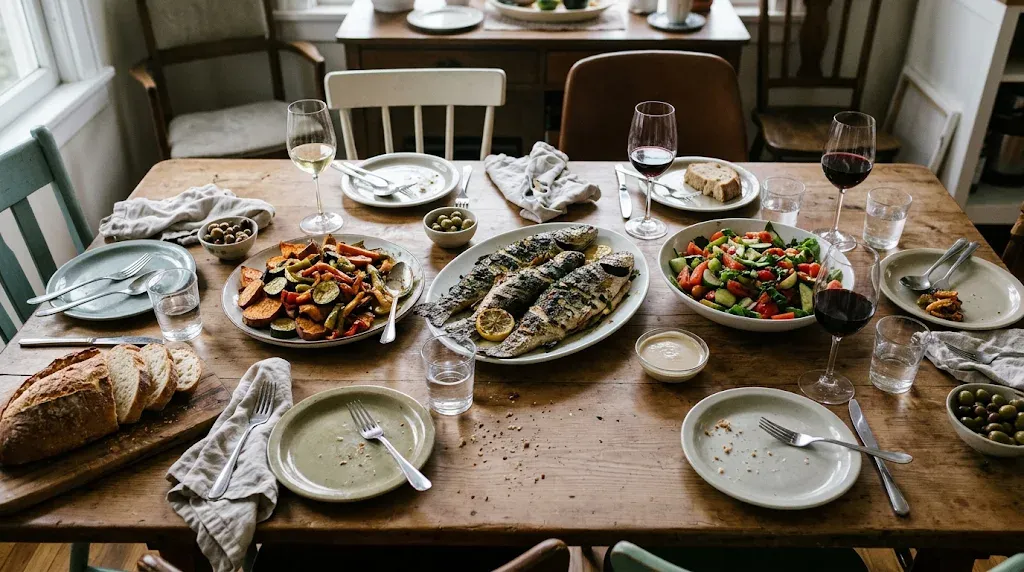
Every wine site will tell you what to drink with steak or pasta. But what do you pour with cholent? With spicy haimeh? With sweet gefilte fish? In this guide we have gathered the dishes of the Shabbat and holiday table, in Ashkenazi cuisine and in Sephardic and Mizrahi cuisine. For each dish: which wine suits it, why, and matching wines from the store.
- A sweet dish? A wine at least as sweet. Next to sweet food, a dry wine will taste sour and thin.
- A spicy dish? A fresh, fruity wine that is not heavy. Heat amplifies the sensation of alcohol and tannins.
- A sour dish (lemon, tomatoes)? A wine with good acidity. Otherwise the wine will taste flat.
- A heavy, fatty dish? A wine with body. Fat and protein soften the tannins of a red wine.
- Cholent: a full-bodied red
- Hamin (dafina): a full-bodied, fruity red
- Gefilte fish: an off-dry white, or a dry sparkling wine
- Haimeh: a fruity rosé or an aromatic white
- Roast chicken: a light, fruity red
- Braised beef (brisket): a medium- to full-bodied red
- Spicy salads: a fresh white or a rosé
- Sweets with honey and almonds: a sweet dessert wine
Ashkenazi cuisine
Gefilte fish
Cooked ground fish, usually slightly sweet, served with horseradish.
What to pourAn off-dry white, or a dry sparkling wine
Gefilte fish is slightly sweet, and next to it a wine that is too dry will taste sour. A white with a touch of sweetness and good acidity, like an off-dry Riesling, complements it and also holds up against the horseradish. A peppery, unsweetened gefilte fish? A dry, fresh Sauvignon Blanc.
On the grapes: Riesling · Sauvignon Blanc
Chicken soup
A clear, rich soup, with kneidlach or noodles.
What to pourA delicate, medium-bodied white
The soup is rich but delicate, and a heavy wine would overpower it. A soft, unoaked white, such as a Chardonnay without much oak, or Viognier, complements the flavor without taking over.
On the grapes: Chardonnay · Viognier
Herring and salted fish
At the Shabbat morning Kiddush, alongside the cholent.
What to pourA dry sparkling wine
The fish is salty, oily and sometimes smoked. The bubbles and acidity of a dry sparkling wine cleanse the palate between bites.
Roast chicken
Chicken in the oven with potatoes and fresh herbs.
What to pourA light, fruity red
Tender chicken meat doesn't need a heavy wine. A light red with gentle tannins, such as Pinot Noir, complements it without taking over. Prefer a white? A medium-bodied Chardonnay.
On the grapes: Pinot Noir · Chardonnay
Braised beef (brisket)
Slow-cooked beef, with sauce.
What to pourA medium- to full-bodied red
Tender, juicy meat with a rich sauce. A red with dark fruit and soft tannins, like Merlot, suits it very well.
On the grapes: Merlot · Cabernet Sauvignon
Cholent
A heavy Shabbat stew of meat, beans, barley and potatoes, cooked all night.
What to pourA full-bodied red
Cholent is rich, fatty and heavy, and a light wine would disappear next to it. You need a red with body and tannins, like Cabernet Sauvignon or Syrah. The fat and protein in the meat soften the tannins. Is your cholent on the sweet side (with honey or sweet kishke)? Choose a fruity red, like Shiraz.
On the grapes: Cabernet Sauvignon · Syrah (Shiraz)
Potato kugel
A salty, greasy kugel with a crisp crust.
What to pourA medium-bodied red, or a fresh white
The kugel is salty and greasy. A red with soft tannins and red fruit, like Grenache, suits it. A white with good acidity works too: the acidity "cuts" the fat.
On the grapes: Grenache · Sauvignon Blanc
Jerusalem kugel
A caramelized noodle kugel, sweet and peppery at once.
What to pourA fruity rosé or an off-dry white
A sweet dish needs a wine that is not completely dry, otherwise the wine will taste sour. The black pepper suits a fresh, fruity wine, without much tannin or alcohol, which would amplify the heat.
On the grapes: Riesling
Stuffed cabbage
Cabbage leaves stuffed with meat and rice, in a sweet and sour sauce.
What to pourA medium-bodied white
The sauce is sweet and sour. A white with good acidity and fruitiness, like a medium-bodied Chardonnay or Riesling, balances it. An especially sweet sauce? An off-dry Riesling.
On the grapes: Chardonnay · Riesling
Tzimmes
Cooked carrots with honey or sugar, especially at Rosh Hashanah.
What to pourA sweet wine, such as Muscat
This is the key rule when pairing with a sweet dish: the wine must be at least as sweet as the food. Otherwise it will taste sour and thin.
On the grapes: Muscat
Apple strudel and honey cake
Shabbat and holiday desserts.
What to pourA sweet dessert wine
As with tzimmes: the dessert is sweet, so the wine must be at least as sweet. A sweet Muscat wine with aromas of fruit and flowers suits apples and honey especially well.
On the grapes: Muscat
Sephardic and Mizrahi cuisine
Haimeh
Fish in a spicy tomato sauce, with garlic, paprika and coriander.
What to pourA fruity rosé or an aromatic white
The heat amplifies the sensation of alcohol and tannins, so a heavy red will "burn" in the mouth. A fresh, fruity wine with moderate alcohol soothes the heat, and its acidity suits the tomato sauce. An especially spicy haimeh? A wine with a touch of sweetness, like an off-dry Riesling or Gewürztraminer.
On the grapes: Riesling · Gewürztraminer · Grenache
Spicy salads
Matbucha, Moroccan carrots, eggplant and zhug, at the start of the meal.
What to pourA fresh white or rosé
The same principle as with haimeh: with spicy food, choose a fresh, fruity wine that is not heavy. The acidity of a white or rosé suits the tomatoes, lemon and vinegar in the salads.
On the grapes: Sauvignon Blanc · Riesling
Fried fish
Breaded fish fillet, fried.
What to pourA dry sparkling wine or a dry rosé
The bubbles and acidity "cut" the oil and refresh the mouth.
Kubbeh hamusta soup
Semolina dumplings stuffed with meat, in a sour soup with lemon and vegetables.
What to pourA white with high acidity
A lemony, sour soup lowers the perceived acidity of the wine, and a wine that is too soft will taste flat next to it. A sharp, fresh white, like Sauvignon Blanc, keeps its freshness.
On the grapes: Sauvignon Blanc
Chicken with olives and lemon
Braised chicken with olives, preserved lemon and spices.
What to pourA crisp dry white or a light rosé
The olives and lemon are salty and tart. A crisp dry white or a light rosé suits them better than a heavy red.
On the grapes: Sauvignon Blanc · Chardonnay
Mafrum
Potatoes stuffed with meat, fried and simmered in a spiced tomato sauce.
What to pourA medium-bodied red with good acidity
The tomato sauce is acidic, so the wine needs good acidity, or it will taste flat. The spices go well with a fruity red without overly strong tannins, such as Grenache, Carignan or Merlot.
Hamin (Dafina)
A long-simmered Shabbat stew of meat, eggs, potatoes and chickpeas, sometimes with dates or sweet potato.
What to pourA full-bodied, fruity red
Hamin is rich and heavy, like cholent, so it calls for a red with body. The dates, sweet potato and sweet spices pair especially well with a fruity red such as Syrah, Grenache or Carignan.
On the grapes: Syrah (Shiraz) · Grenache · Carignan
Meat with plums and dried fruit
A festive stew, for Rosh Hashanah for example, with plums, dried apricots and cinnamon.
What to pourA full-bodied, fruity red
The dried fruit adds sweetness and the meat adds richness. A full-bodied red with ripe fruit, such as Syrah or Grenache, suits both.
On the grapes: Syrah (Shiraz) · Grenache
Sweets with honey and almonds
Cookies, mofletta and sweet pastries.
What to pourA sweet dessert wine
As with any dessert, the wine should be at least as sweet as the pastry, or it will taste sour. A sweet Muscat goes well with honey and almonds.
On the grapes: Muscat
And what about Kiddush wine?
Any wine can be used for Kiddush, dry or sweet. If you serve sweet dishes at the start of the meal, such as sweet gefilte fish, you will enjoy a sweet Kiddush wine too. If you serve spicy salads, a crisp white or rosé will be more enjoyable.
More: How to choose Kiddush wine · Wine for meat · Wine for fish · Wine for a dairy meal
The pairings in this guide are recommendations, not rules. Your own taste is what decides. The recommendations are based on the pairing principles commonly accepted in the wine world (WSET) and on kosher wine guides.
Sources
- Wine and food pairing principles, WSET Level 2
- 10 Wine Pairings for Shabbat Foods (KosherWine.com)
- Rosh Hashanah Wine Pairings (KosherWine.com)
- What Wine Goes With Fish (Kosher Wine Direct)
- Which wine to pair with a Moroccan tagine (Matching Food & Wine)
- Wines to pair with spicy food (Tasting Table)
- Wine, winter food and everything in between (ynet)
More guides: Grape varieties · How much wine do you need for an event · Wine glossary
See also: Wine for Shabbat · Serving temperature